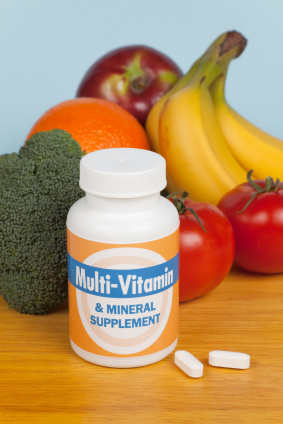
Free Radicals: How Vitamins Can Help
Free Radicals: How Vitamins Can Help
By: Dr. George Obikoya
A free radical is a chemical "species" that contains an unpaired electron. This is very bad to have in your body, because it wants to achieve stability. The only way to do that is to combine, or "react" with other molecules. Unfortunately, usually those molecules are important things like DNA or our cells. A few stable free radicals are known but most are very reactive (they want to combine with other molecules). In free radical chain reactions, the radical product of one reaction becomes the starting material for another, propagating free radical damage - think out of control nuclear fission.
There are three steps to free-radical chain reaction: initiation, propagation, and termination. In the initiation step, free radicals are formed from molecules that readily give up electrons, such as hydrogen peroxide. In the propagation steps, the chain-carrying radicals are alternately consumed and produced. In the termination steps, radicals are destroyed. Thus, without termination by an agent such as an antioxidant, a single free radical can damage numerous molecules, including your DNA.
There are four common oxygen metabolites in our bodies that are free radicals: superoxide anion (O2- ), hydrogen peroxide (H2O2), hydroxyl radical (OH ), and singlet oxygen (1O2). These free radicals can be generated via a number of mechanisms, including normal physiologic processes and processes resulting from other external factors such as damage to the body or increased exercise.
For example, singlet oxygen is generated by photosensitization reactions wherein a molecule absorbs light of a given wavelength, exciting the molecule. This excited molecule transfers the increased energy to molecular oxygen, creating singlet oxygen, which then can attack other cell components and start a chain reaction.
It appears that the primary function of carotenoids, an important
class of antioxidants, is to scavenge free radicals, particularly
singlet oxygen produced by photosensitization.
A certain amount of oxidative function is necessary for proper health.
For example, oxidation processes are used by the body's immune systems
to kill microorganisms. Sometimes, however, the level of toxic reactive
oxygen intermediates (ROI) overcomes the antioxidant defenses of
the host, resulting in an excess of free radicals and a state called
oxidative stress. This process can be extremely damaging, as its
effects compound over time.
Free radicals can induce local injury by reacting with lipids, proteins, and nucleic acids (such as DNA). The interaction of free radicals with cellular lipids leads to membrane damage and the generation of lipid peroxide byproducts. Interaction with nucleic acids leads to a breakdown of our DNA and increased cellular death.
Cells contain a number of antioxidants that have various roles in protecting against free radical reactions. The major water-soluble antioxidant metabolites are glutathione (GSH), the B vitamins and vitamin C. Many water-soluble enzymes also catalyze these reactions. Vitamin E and the carotenoids are the principal lipid-soluble antioxidants. Vitamin E is the major lipid-soluble antioxidant in cell membranes that can break the chain of lipid peroxidation. Therefore, it is the most important antioxidant in preventing oxidation of these fatty acids. Vitamin E is recycled by a reaction with vitamin C, so it is commonly suggested to take both vitamins E and C together.
Despite the actions of antioxidant nutrients, some oxidative damage will occur, and accumulation of this damage throughout life is believed to be a major contributing factor to aging and disease. Fortunately, you can reduce the oxidative stress on your cells with common, inexpensive vitamin supplements.
The Institute of Medicine (IOM) recently updated nutritional requirements for the antioxidant nutrients (vitamin C, vitamin E, carotenoids, and selenium), as well as other nutrients. In the past, Recommended Dietary Allowances (RDAs) were used in the United States and Recommended Nutrient Intakes (RNIs) were used in Canada. Since the last review of these guidelines in 1989 and 1990, respectively, harmonized new data have emerged reflecting dietary requirements of food components and their role in maintaining health.
Reactive oxygen species are some of the most dangerous by-product of our breathing. Fortunately, antioxidants help clear our body of reactive oxygen intermediates (ROI). Nutritional antioxidants are believed to have potential treatment for a wide variety of diseases, including cancer, atherosclerosis, chronic inflammatory diseases, even aging. Take vitamins E and C for example. Recent research shows that in combination, these vitamins in combination were extremely effective at lowering your risk of developing Alzheimer's disease.
An antioxidant is a substance that in low concentrations relative to the oxidizable substrate substantially delays or reduces oxidation of the substrate . Antioxidants fight oxidation, hence their name. They protect other chemicals in our body from toxic oxidation reactions by reacting with free radicals and other reactive oxygen species, essentially derailing the oxidation process. In a way similar to how sunblock works, the antioxidant (such as Vitamin E) sacrifices itself by being oxidized during this reaction.
Because your antioxidant supply is limited, as one antioxidant molecule is only capable of reacting with one free radical, you need to regularly replenish your antioxidant supplies via vitamin supplementation. There are many antioxidants including vitamin C, vitamin E, selenium, and the carotenoids and a multitude of other nutrients, including minerals such as copper, manganese, and zinc, flavonoids (such as grape seed extract and phenols found in green tea) and coenzyme Q10 that are all powerful antioxidants.
Because vitamin C is water soluble, its antioxidant functions take place in aqueous body compartments. It also helps protect low-density lipoprotein cholesterol (LDL-C) against free radical damage. As an antioxidant, it helps protect against cancer, cardiovascular disease, and certain effects of aging. Vitamin E is fat soluble, so its antioxidant properties are best used by fattier parts of the body such as the brain.
Unlike other vitamins, which are involved in metabolic reactions, it appears that the primary role of vitamin E is to act as an antioxidant. Vitamin E is incorporated into the lipid portion of cell membranes and other molecules, protecting these structures from oxidative damage and preventing the propagation of lipid peroxidation. Vitamin E can protect us against cancer, heart disease, and complications of diabetes.
The only specific known purpose of carotenoids in humans is to act as a source of vitamin A in the diet, but they also have important antioxidant effects. The latter are based on the caretenoids' ability to quench singlet oxygen and trap peroxyl radicals, thereby preventing lipid peroxidation. As a result, carotenoids protect against the development of cancer, cardiovascular disease, and ocular (eye) disorders.
Carotenoids also affect cell growth regulation and gene expression. Diets low in carotenoids may lead to increased risk of cancer and heart disease. Lycopene is the most potent antioxidant for quenching single oxygen and scavenging free radicals.
A good multivitamin is the foundation of health and nutrition. Take a look at our scientific reviews of many of the popular brands for factors such as ingredients, areas of improvement, quality level, and overall value. If you are looking for a high quality liquid multivitamin, we suggest that you take a look at the Multivitamin Product Comparisons.
References
Corrigan JJ Jr, Marcis FI. Coagulopathy associated with vitamin
E ingestion. JAMA. 1974;230:1300-1.
Kim JM, White RH. Effect of vitamin E on the anticoagulant response to warfarin. Am J Card. 1996;77:545-6.
Paiva SAR, Russel RM. Beta-carotene and other carotenoids as antioxidants. J Am Coll Nutr. 1999;18:426-33.
Gerster H. The potential role of lycopene for human health. J Am Coll Nutr. 1997;16:109-26.
Goodman DS Goodman DS. Vitamin A and retinoids in health and disease. N Engl J Med. 1984;310:1023-31.
