What Form of Vitamin E is Best?
What Form of Vitamin E is Best?
By: Dr. George Obikoya
There is no denying that vitamin E is extraordinarily beneficial for your body in many different ways. Researchers discovered Vitamin E about eighty years ago, but only in the past few years have we started to appreciate its power as an antioxidant.
Research studies have shown that Vitamin E fights oxygen free radicals, and helps stave off diseases and enhance our overall health. Yet most of us do not get even the recommended daily allowance of 30 International Units. Unless you want to drink two quarts of corn oil and eat a pound of sunflower seeds everyday, the only way to increase your Vitamin E intake is with supplements, preferably in liquid form due to better absorption than pill form. Vitamin E deactivates potentially damaging oxygen free radicals, and prevents heart diseases and other related complications. People with exiting heart disease who take Vitamin E have a 77% lower risk of subsequent (non-fatal) heart attack that those who do not.
Vitamin E protects against prostate cancer. One recent finish study reported a reduced incidence of prostate cancer in male smokers who took 50 IU Vitamin E daily for five to eight years.
Vitamin E prevents or delays cataracts and macular degeneration. Liquid vitamin E supplementation cuts the incidence of cataracts in half. The risk of late stage macular degeneration, the leading cause of blindness in the elderly, is significantly lower in older adults who take high levels of Vitamin E.
Vitamin E helps prevent Alzheimer disease, particularly if combined with vitamin C, both taken in high doses (greater than 400 IUs a day for Vitamin E). Vitamin E boosts immune function. Some studies have shown improved immune responses in older people who take liquid vitamin E supplements.
You probably know there are different forms of vitamin E. You might even know what these different forms are and how they are different. But have you ever wondered what form of vitamin E is the best? Some say that natural vitamin E is better than synthetic. Is this true? What makes the best form the best?
If you are asking these questions, you will find the answers here. True, Vitamin E is available in many different forms. In its natural form, vitamin E is designated d-, as in-d-alpha-tocopherol, while its synthetic forms are dl-, as in dl-alpha-tocopherol. The letters d and l reflect mirror images of the vitamin E molecule.
Our body only recognizes the d form. Although the l form has antioxidant activity, it may actually inhibit the d-form from entering cell membranes. Therefore, natural vitamin E (the d form) has greater benefit than the synthetic (dl). You should, therefore, take the natural (d-) form of vitamin E and avoid the synthetic.
Whether or not the vitamin E is natural, there are several natural tocopherols and related compounds known as tocotrienols that also have health benefits. For example, while the vitamin E activity of alpha-tocotrienol is rated at 30% compared to alpha-tocopherol's 100%, alpha-tocotrienol actually showed greater anti-tumor activity.
In a study of men with coronary artery disease, it was d-gamma-tocopherol that was low, not d-alpha-tocopherol suggesting that d-gamma- may be more important than d-alpha-tocopherol in preventing heart disease.
Natural vitamin E supplements containing mixed tocopherols including the tocotrienols, in effect, seem to offer the greatest benefit. Natural vitamin E is retained in humans at least two times greater than the synthetic form of the supplement, according to a new study published in the April 1998 American Journal of Clinical Nutrition.1
The research, conducted with volunteer subjects in Canada and the United States, is the second such study reported in the past two months. The researchers found that first in blood, and then eventually in organ levels, levels of natural vitamin E were almost double those of synthetic vitamin E, and they were consistently found at these levels.
Natural and synthetic forms of vitamin E are truly different. Previous research has shown natural vitamin E is better retained and more biologically active than synthetic. To identify the kind of vitamin E in a supplement, you should read the ingredients listed on the label, and you can tell which is the natural vitamin (starts with "d," as in "d-alpha-tocopherol) and which is synthetic (begins with "dl.")
Higher doses of vitamin E have been found effective in reducing the risk of coronary heart disease. Both forms of vitamin E are absorbed equally well through the gut, but the liver clearly prefers the natural form, transferring it to lipoproteins to be transported through the blood for deposition into the tissues. The natural vitamin E is retained by a two-to-one ratio over the synthetic. Natural vitamin E may cost 2 to 3 times more, but it is twice as effective. You can sometimes find the natural vitamin E included in a quality liquid multivitamin, at much lower cost.
In an earlier study, 2 researchers found natural vitamin E at three times the concentration in the placental cords of pregnant women than the synthetic form, after the women took supplements containing both natural and synthetic forms of the vitamin. This is significant because it suggests the placenta can deliver natural vitamin E to the fetus much more efficiently than synthetic. The lesson: women should take prenatal supplements that contain the natural form of vitamin E.
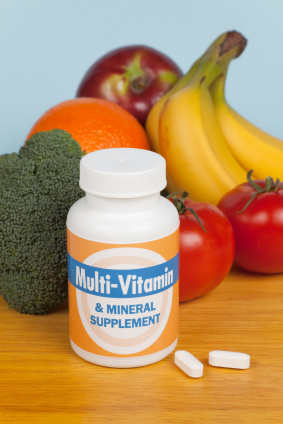
A good multivitamin is the foundation of health and nutrition. Take a look at our scientific reviews of many of the popular brands for factors such as ingredients, areas of improvement, quality level, and overall value. If you are looking for a high quality liquid multivitamin, we suggest that you take a look at the Multivitamin Product Comparisons.
References:
1. AM J Clin Nutr 1998;67:669-84.
2. Am J Clin Nutr 1998;67;459-64).
