B Vitamins - Energy
B Vitamins - Energy
By: Dr. George Obikoya
There are nearly 40 vitamins, minerals, and dietary components that your body needs but cannot manufacture in sufficient amounts. That is why these are called essential vitamins and minerals. Acting in concert, these essential vitamins and minerals help keep billions of cells healthy and encourage them to grow and reproduce. A lack of vitamins or a diet that has inadequate amounts of certain vitamins can upset the body's internal balance or block one or more metabolic reactions. This can lead to a cascading reaction in the body, as it struggles to compensate with what is essentially an acute starvation.
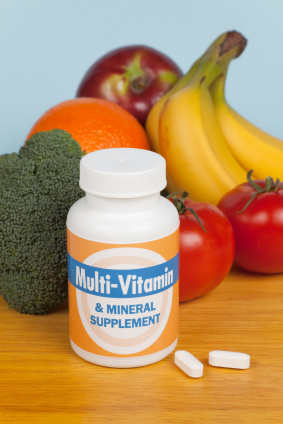
The B vitamins are water-soluble vitamins. This means that they are excreted in the urine and can be quickly depleted from the body. When we take more water-soluble vitamins than we need, small amounts are stored in body tissue, particularly the liver, but most of the excess is excreted in urine. Because water-soluble vitamins are not stored in the body in appreciable amounts and are depleted from the body so quickly, it is important that we take supplements of the B vitamins in large daily amounts to replenish these important vitamins in our body.
The B vitamins act as coenzymes, compounds that unite with a protein component called an apoenzyme to form an active enzyme. The enzyme then acts as a catalyst in the chemical reactions that transfer energy from the basic food elements to the body. The B vitamins are a group of eight vitamins, which include thiamine (B1), riboflavin (B2), niacin (B3), pyridoxine (B6), folic acid (B9), cyanocobalamin (B12), pantothenic acid and biotin. Most of the B vitamins have been recognized as coenzymes, and they all appear to be essential in facilitating the metabolic processes that are essential for life. These vitamins are essential for the breakdown of carbohydrates into glucose, which provides us energy, the breakdown of fats and proteins, which aids the normal functioning of the nervous system, muscle tone in the stomach and intestinal tract, and healthy skin, hair, and eyes. Since these vitamins affect such important elements of your body, a source that provides them all in a single daily supplement is recommended.
The B vitamins are important for the proper formation of every cell in your body, particularly nerve cells. This is why it is so important for pregnant women to take supplements that contain the B vitamins, particularly folic acid, and why a deficiency of certain B vitamins manifests itself first as a depressed mood or being moody. Vitamin B1, or thiamine, helps the body turn carbohydrates into energy. It also helps your body metabolize proteins and fats. Vitamin B1 deficiency affects the functioning of gastrointestinal, cardiovascular, and peripheral nervous systems. Thiamine deficiency can cause Beriberi and Wernicke-Korsakoff syndrome, sometimes seen in alcoholics. Symptoms of beriberi include loss of appetite and overall lassitude, digestive irregularities, and a feeling of numbness and weakness in the limbs and extremities. We need vitamin B2, or riboflavin to complete several reactions in the energy cycle. Common symptoms of vitamin B12 deficiency are reddening of the lips with cracks at the corners of the mouth, inflammation of the tongue, and a greasy, scaly inflammation of the skin.
Niacin, or nicotinic acid, helps us metabolize carbohydrates. Chronic Niacin deprivation leads to pellagra, a disease characterized by skin lesions, gastrointestinal disturbance, and nervous symptoms. Niacin, (Vitamin B6) is a coenzyme for several enzyme systems involved in the metabolism of proteins, carbohydrates, and fats. Long-term use of large doses of vitamin B6 can, however, cause complications in the peripheral nervous system. Vitamin B12, or cyanocobalamin, is a complex crystalline compound that functions in all cells, but especially in those of the gastrointestinal tract, the nervous system, and the bone marrow. Vitamin B12 helps the development of our red blood cells and if lacking in B12, a person will commonly suffer from pernicious anemia
We need at least 400 mcgs of folic acid for the synthesizing nucleic acids and the forming red blood cells. Its deficiency most commonly causes folic-acid-deficiency anemia. Symptoms include gastrointestinal problems, such as sore tongue, cracks at the corners of the mouth, diarrhea, and ulceration of the stomach and intestines. Pantothenic acid promotes a large number of metabolic reactions essential for our growth and well-being. Its deficiency can result in growth failure, skin lesions, and even graying of the hair. Biotin is important in metabolic processes that result in the formation of fats and the utilization of carbon dioxide. Biotin deficiency results in anorexia, nausea, vomiting, tongue inflammation, paleness, depression, and dermatitis.
Research studies have shown that the B vitamins, particularly folate, B12, and B6 help lower homocystein levels, hence the risk of heart attacks. The levels of folic acid and vitamins B6 and B12 needed to achieve this effect, however, are higher than one would get from a typical multivitamin/mineral supplement.1 The standard US RDA just doesnt cut it when it comes to these vitamins; as much as five times the amount of daily recommended B6 is required, whereas as much as thirty to forty times the amount of estimated daily B12 is ideal. Finding a multivitamin that contains the correct dosages is important.
In a nutshell, Vitamins B6 and B12 are extremely helpful at protecting the heart and nerves and lowering levels of the damaging homocysteine. For further information on why this works, and a comparison of the products available as supplements, take a look below.
A good multivitamin is the foundation of health and nutrition. Take a look at our scientific reviews of many of the popular brands for factors such as ingredients, areas of improvement, quality level, and overall value. If you are looking for a high quality liquid multivitamin, we suggest that you take a look at the Multivitamin Product Comparisons
Scientific Explanation:
When it comes to heart disease, several mechanisms are
likely to be involved in the induction of vascular damage by homocysteine.
These include endothelial cell desquamation, oxidation of low-density
lipoprotein, increased monocyte adhesion to the vessel wall, and
impaired vascular response to the endothelium-dependent relaxing
factor nitric oxide. An acute increase in plasma homocysteine level
has been linked to activation of coagulation. It also impairs hemodynamic
and rheologic responses to L-arginine, the natural precursor of
nitric oxide, a compound that is responsible for keeping blood vessels
open, and whose function homocysteine seems to interfere with.
Reference:
1.Effect of homocysteine-lowering therapy with folic acid, vitamin
B12, and vitamin B6 on clinical outcome after percutaneous coronary
intervention. G. Schnyder, M. Roffi, Y. Flammer, et al., The Swiss
Heart Study: A randomized controlled trial. JAMA., 2002, vol. 288,
pp. 973--979
