Vitamins for Children
Vitamins for Children
By: Dr. George Obikoya
Are vitamins important to children? Can children use vitamins? How much of a certain vitamin should a child be given? It is well known that children do not like vegetables, which are known to be rich in vitamins and minerals. Does this mean they need vitamin supplements? These are all important questions that parents often seek answers to. Let's shed some light on this topic.
Vitamins are, by definition, substances we need for our body to function normally. Does this rule exclude children? Absolutely not. We need vitamins for healthy vision, to grow, to make bones and connective tissue, to fight infections, diseases and cancer, to heal wounds, to prevent us from bleeding to death, and to keep our teeth healthy and strong. Don't these also apply to children? Of course they do!
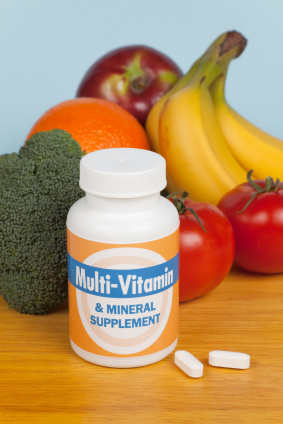
So we have established that we need sufficient vitamins intake to be healthy. We have also established the fact that we cannot produce enough vitamins to meet our needs. We, therefore, need to get them from outside sources, largely our diet and from commercial nutritional supplements. Multivitamins are the best source for children to receive the nutrients they need in order to grow and develop.
Not many of us eat a balanced diet on a regular basis if at all, nor do many of us give our children a daily balanced diet either. (Happy Meals anyone?) The stresses of modern living have made sure we are not home long enough or have enough time to prepare regularly balanced meals for ourselves and our children. Indeed, more people are eating out most times. Now, this is a serious problem for us as adults, but is even more serious for children still growing. When was the last time you saw a healthy fast food chain? The CEO's of McDonalds and Wendy's have both died from heart attacks. It doesn't take a genius to get a feeling that fast food is extraordinarily damaging to one's health.
As if the above is not enough to contend with, there are periods in the lives of growing children when they tend to be very choosy about what they eat; we are all familiar with the fast-food phenomenon. In fact, some of them don't even want to eat at all. One of the challenges of parenting is to ensure their children eat to eat a balanced diet, but how often does this actually happen?
How about the fact that the highly processed foods of our times contain little natural vitamins? What about the fact that even our fruits and vegetables are often grown using agricultural techniques that minimize the vitamin and mineral contents? Does this not affect our abilities to get sufficient vitamins from what we eat? Don't all these mean it is imperative we give our children multivitamins as supplements to the (few) vitamins they get in their food?
As a concerned parent, the answer should be yes. Indeed, it is recommended that children who began eating solid food at six months be given vitamin supplements by age one. Due to the likely difficulty in getting your child to swallow a pill form of a vitamin, it might be easier to try a liquid form. Most children acquire adequate vitamins in breast milk and infant formula before their first birthday if they do not suffer from any disease preventing them from doing so. It may be necessary to give children that do not get enough exposure to sunlight vitamin D before then.
Toddlers and preschoolers are often picky about their foods. They will need supplemental multivitamins in particular. As these children grow, their tastes change over time and usually start to eat a more balanced diet. You should give children vitamins during these years as well to ensure they are well nourished and are getting the nutrients they need to ensure normal growth and development.
Children that are deficient in vitamins suffer from the same symptoms and signs specific to the vitamin they lack. Indeed, because children's body and immune systems are not developed as those of adults, they are more susceptible to the ravaging consequences of vitamin deficiencies that only grow worse over time. At least as kids they have an opportunity to correct these deficiencies - as adults it may be too late.
The effects of vitamin D deficiency on children exemplifies this point. Babies who do not get enough or produce enough vitamin D can develop rickets, the failure of developing bones to form properly. In the absence of adequate amounts of vitamin D, which is considered to be 400 IU by the US FDA, the body steals calcium from the bones to keep the blood levels of calcium high enough for life. Breast-fed babies whose mothers do not get adequate time in the sun can develop rickets. This is true particularly in colder climates and in darker-skinned persons. Window panes and sometimes smog or haze can also block the sun's rays a child needs to create vitamin D.
These children end up with brittle bones, often the first noticeable in their thin, pliable skull, which if pressed on can feel like pressing on a ping-pong ball. The head shape may be abnormal, teething delayed, and teeth improperly formed with many cavities. The wrists and ankles may appear swollen. The tips of the rib bones can enlarge creating a string of lumps called the rachitic rosary. Bowed legs, knock-knees, or fractures are common and these children tend to sweat more than average.
Babies need just an average of 400 IU of vitamin D per day to prevent rickets. Nursing mothers should also take lots of vitamin D and to try to get their babies outside the house several times a week, but please avoid sunburn. Vitamin D supplements should be given to make sure the child is getting something he or she critically needs. Check the milk formula you are giving your child to make sure it contains vitamin D and in sufficient amounts.
Giving your children vitamins will free you from worrying about their diet and make it possible to be more creative in feeding them in an effort to ensure they are well nourished. Note, however, that giving them excessive amounts of certain minerals such as iron can be unhealthy. Good, high quality liquid (this form is easier to swallow and has a higher rate of absorption) multivitamins are available at low cost and are advised for all children.
A good multivitamin is the foundation of health and nutrition. Take a look at our scientific reviews of many of the popular brands for factors such as ingredients, areas of improvement, quality level, and overall value. If you are looking for a high quality liquid multivitamin, we suggest that you take a look at the Multivitamin Product Comparisons.
