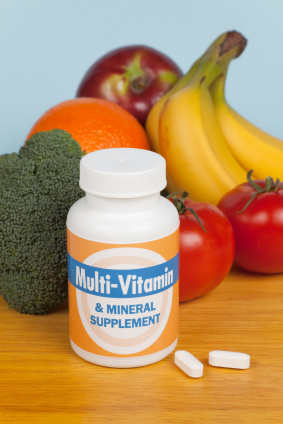
Can Vitamins help me live longer?
Can Vitamins help me live longer?
By: Dr. George Obikoya
Without the necessary vitamins, minerals, and nutrients our bodies fall into a degenerative state, also known as aging. You need the necessary amino acids, minerals, proteins, and vitamins to revitalize proper cell regeneration and without them, the body falls faster into disrepair (ages). A little over fifty years ago, Denham Harman, then a researcher at the University of California at Berkeley, realized one reason why people get old. Free radicals, molecules that can attack cells, are responsible, and substances found in our bodies and in food called antioxidants might just slow the damage, he theorized.
Harman's free radical theory of aging was (not surprisingly) initially greeted with a mix of apathy and criticism. Industrial chemists had long known about free radical reactions--for example, free radicals make iron rust--but most scientists had doubted that they occurred in living creatures. That was then. This is now.
Today, thousands of studies have corroborated Harman's theory. "Antioxidant" has become a household word, and Americans spent $2.3 billion dollars on antioxidants last year, according to the Nutrition Business Journal. Antioxidants can reduce your risk of heart disease, cancer, even Alzheimer's. And they might even increase your life span.
You can fight the effects of aging by taking the following five vitamins and minerals. If you take a multivitamin, check the recommended dosages below against the contents of your multi; you may already be getting what you need if you are taking a quality multivitamin. Fortified foods like breakfast cereals and orange juice may also cover some of your requirements, so consider those as well, but generally are not anywhere near enough.
Calcium: Your bones are at risk of decreasing in mass over time, increasing the chance of suffering a fracture. However, hundreds of studies have demonstrated the positive effect of calcium supplements on bone health. To prevent osteoporosis, experts recommend that you take 1,000 mg of calcium a day if you are 50 or younger and 1,200 mg daily if you are over 50.
Take it in divided doses with 400 IU of vitamin D (to aid in absorption) and 500 mg of magnesium (calcium and magnesium work together in your body, and magnesium activates an enzyme necessary to form new bone). Take vitamin D and magnesium in divided doses as well, if possible.
Folic Acid: The decrease in brain function that many people develop with increasing age has been associated with high levels of homocysteine, a dangerous amino acid that is becomingly increasingly linked to heart disease. Folic acid has been shown to help decrease homocysteine levels. According to a study published in the Journal of Nutrition last year, folic acid supplements can improve both memory and cognitive function. Many experts recommend taking 400 mcg of folic acid per day, but research is increasingly showing the benefits really kick in at 800mcg or higher.
Vitamin C: This antioxidant vitamin protects both your vision and your skin against aging. First, it appears to prevent the oxidation in the lens of the eye that can lead to cataracts. A study from the USDA Human Nutrition Research Center on Aging found that women with a long history of taking vitamin C supplements had a lower lens opacity (a measure of vision loss) than women who took none. Other research has found that taking vitamin C forestalls the development of cataracts.
Second, as your skin cells age, they lose the ability to produce collagen, a protein that supports your skin. This lack of collagen may cause your skin to wrinkle. Vitamin C has been shown to help build collagen. Thus, some experts believe taking vitamin C orally, or using it topically, may prevent wrinkles. Bear in mind that topical application of many vitamins will not lead to absorption, only consuming the vitamin will. Liquid vitamins absorb 5 times better than do pill vitamins.
To keep your eyes healthy and your skin smooth, supplement with 500 mg of vitamin C daily.
Vitamin E: The more vitamin E you get, the less cognitive decline you'll experience as you age, according to a recent study of more than 2,500 seniors conducted at the Rush Institute for Healthy Aging in Chicago.
Researchers aren't exactly sure how vitamin E affects your brain, but they theorize that E has an antioxidant effect on brain cells, protecting them from dangerous free radicals. Take 800 IU of vitamin E daily as natural mixed tocopherols.
Vitamin K: Acting as a taxi service for calcium, vitamin K gives calcium a ride right to where your bones need it, helping to ensure that they stay strong as you age. Studies have found a direct relationship between blood levels of vitamin K and bone mineral density. To reduce your risk of fractures, experts recommend taking 1000 mcg of vitamin K per day. But since vitamin K can interfere with blood thinners like Coumadin (warfarin), check your dose with your doctor if you currently take any of these drugs. If you have a risk of heart disease, consider skipping more than the recommended doses of vitamin k as it is known as the "clot" vitamin.
Although aging is inevitable, it is clear that there are steps you can take to combat effects such as the onset of wrinkles or the increased risk of developing serious conditions like cancer. By combining a well-rounded diet, nutritional supplements geared toward your individual needs and regular exercise, you'll at the very least be able to slow the effects of senescence, keeping your cells - and yourself - healthy.
A good multivitamin is the foundation of health and nutrition. Take a look at our scientific reviews of many of the popular brands for factors such as ingredients, areas of improvement, quality level, and overall value. If you are looking for a high quality liquid multivitamin, we suggest that you take a look at the Multivitamin Product Comparisons.
References
Harman D. Aging: A theory hosed on free radical and radiation chemistry.
J Gerontol 1956;2:298-300.
Ames BM. Micronutrients prevent cancer and delay aging. Toxicol Lett 1998;102:1035.1038.
Hu HL, Forsey RJ, Blades RJ. Darratt ME, Parmar P, Powell JR. Antioxidants may contribute in the fight against ageing: an in vitro model. Mech Ageing Dev 2000; 121: 217-230.
