Antioxidant Vitamins for Seniors
Antioxidant Vitamins for Seniors
By: Dr. George Obikoya
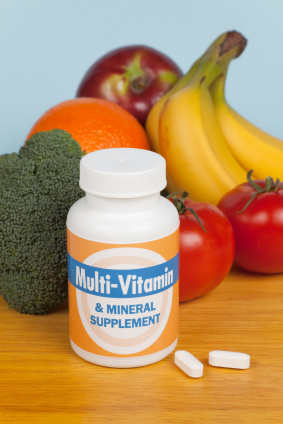
Seniors are prone to nutritional and vitamin deficiencies because they are at risk for being malnourished. They are particularly at risk for many reasons including poor appetite due to medications, disability, or reduced food intake due to intestinal disorders, diabetes, or restrictive diets. As we age, our ability to properly process nutrients decreases, sometimes dramatically. This can also contribute to poor vitamin absorption. To combat both reduced food intake and nutrient absorption, liquid multivitamins are recommended. It is estimated that 40% of the U.S. population takes vitamin supplements, and recently much public and scientific interest has been directed toward antioxidants in particular.1
Antioxidant nutrients are believed to play a role in the prevention and treatment of a variety of chronic diseases, ranging from asthma to cardiovascular disease (CVD) and cancer. The proposed mechanism by which antioxidants protect cells from oxidative stress is by scavenging free radicals and halting lipid peroxidation chain reactions, which can cause damage to DNA, our genetic blueprint. 2
In light of new research on the importance of these vitamins to overall heath, the Institute of Medicine (IOM) recently released new dietary guidelines for intake of the antioxidant nutrients vitamin C, vitamin E, carotenoids, and selenium. In addition, a variety of other nutrients are believed to be involved in antioxidant processes, and are strongly recommended that adequate amounts of these are consumed daily.
Two forms of chemical reactions, oxidation and reduction, occur widely in nature. Iron rusts, which is caused by oxidation. Oxidation is the loss of electrons, and reduction is the gain of electrons. Oxidation and reduction reactions always occur in pairs, i.e., when one atom or molecule is oxidized, another is reduced. Highly reactive molecules can oxidize molecules (i.e., remove electrons from molecules) that were previously stable, and may cause them to become unstable species, such as free radicals.
A free radical is a chemical "species" with an unpaired electron that can be neutral, positively charged, or negatively charged. Although a few stable free radicals are known, most are very reactive. In free radical chain reactions, the radical product of one reaction becomes the starting material for another, propagating free radical damage. This is essentially the oxidative process, and it continues on and on as a chain reaction until stopped.
A certain amount of oxidative function is necessary for proper health. For example, oxidation processes are used by the body's immune systems to kill microorganisms.3 However, the level of toxic reactive oxygen intermediates (ROI) can sometimes overcome the antioxidant defenses of the host, resulting in an excess of free radicals and a state called oxidative stress. These free radicals can induce local injury by reacting with lipids, proteins, and nucleic acids. The interaction of free radicals with cellular lipids leads to membrane damage and the generation of lipid peroxide byproducts. Seniors are particularly prone to this state of affairs because of their often-poor nutritional status. This is why seniors absolutely need an ample supplies of antioxidants.
The major water-soluble antioxidant metabolites are glutathione (GSH), the B vitamins, and vitamin C. Vitamin E and the carotenoids are the principal lipid-soluble antioxidants. Vitamin E is the major lipid-soluble antioxidant in cell membranes that can break the chain of lipid peroxidation. Therefore, theoretically, vitamin E is the most important antioxidant in preventing oxidation of these fatty acids. Vitamin E is recycled by a reaction with vitamin C, so adequate vitamin C should be consumed when taking Vitamin E.
Despite the actions of antioxidant nutrients, some oxidative damage will occur, and accumulation of this damage throughout life is believed to be a major contributing factor to aging and disease.3 We can, therefore, minimize this effect of free radicals by starting to take antioxidants daily and regularly. The earlier this process is started, the less damage will occur. Starting in childhood would certainly be ideal, but starting anytime is far preferred to not starting at all and letting the damage continue.
Observational studies provide fairly consistent data for an inverse association between high intake of antioxidant vitamins and cancer risk. The data is strongest for beta-carotene and vitamin C and their ability to reduce cancer risk is well documented.
For cardiovascular risk, beta-carotene and vitamin E appear to modify the oxidation of LDL-C, making it less prone to cause thickening of the walls of the blood vessels, and vitamin C appears to reduce hypertension. These effects combine to reduce risk of cardiovascular disease.
Research studies show that beta-carotene from fruits and vegetables and supplemental vitamin E are beneficial in the prevention of cardiovascular disease, but take care to avoid synthetic beta-carotene.
The carotenoids, vitamins E and C are implicated in the maintenance of ocular function, and vitamins E and C appear to offer some protection against asthma.
In general, seniors should be encouraged to eat a balanced diet but they also need a daily and regular consumption of antioxidants, in order to protect them from the ravages of free radicals, which they tend to have in abundance. Pay particular attention to the fact that many seniors do not get proper diets and often have decreased ability to absorb and use vitamins and nutrients, and know that a liquid multivitamin is the perfect solution.
A good multivitamin is the foundation of health and nutrition. Take a look at our scientific reviews of many of the popular brands for factors such as ingredients, areas of improvement, quality level, and overall value. If you are looking for a high quality liquid multivitamin, we suggest that you take a look at the Multivitamin Product Comparisons.
References
1. Meyers DG, Maloley PA, Weeks D. Safety of antioxidant vitamins.
Arch Intern Med. 1996; 156: 925-35.
2. Sun Y. Free radicals, antioxidant enzymes, and carcinogenesis. Free Radic Biol Med. 1990 ; 8: 583-99.
3. Winkler BS, Boulton ME, Gottsch JD, Sternberg P. Oxidative damage and age-related macular degeneration. Mole Vis. 1999; 5: 32
